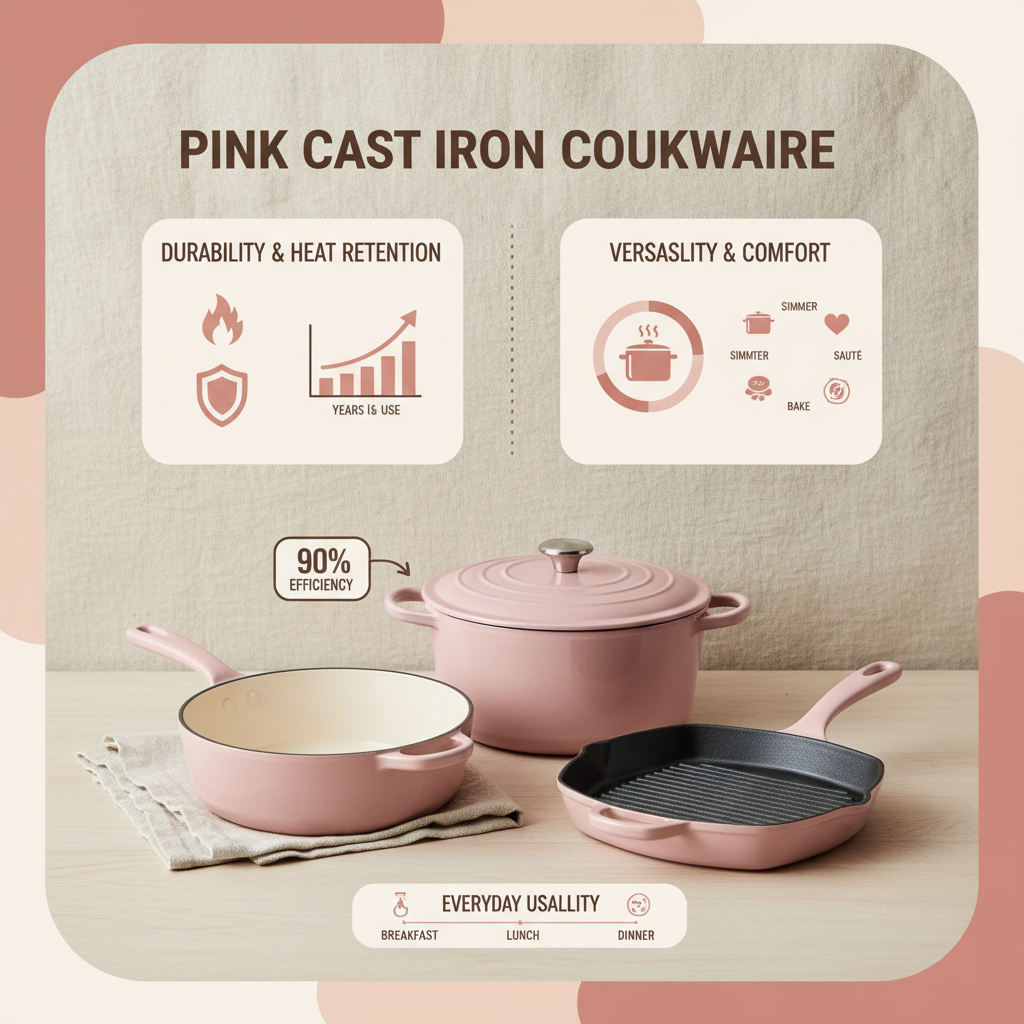
The intersection of culinary tradition and modern aesthetics has given rise to a fascinating trend in the kitchenware market: the emergence of pink cast iron cookware. While cast iron has long been revered for its unparalleled heat retention and durability, the introduction of vibrant enamel coatings, particularly in soft and bold pink hues, has transformed these heavy-duty tools into statement pieces of kitchen art. This evolution reflects a broader global shift toward personalized home environments where functionality no longer requires the sacrifice of visual appeal.
Beyond the surface color, the technical brilliance of pink cast iron cookware lies in the fusion of traditional metallurgy and advanced vitreous enamel technology. By applying a glass-based coating to the rugged iron core, manufacturers provide a non-reactive surface that eliminates the need for laborious seasoning while maintaining the legendary thermal mass of cast iron. This makes it an ideal choice for home chefs who demand professional-grade results but prefer the ease of maintenance associated with modern enamel.
Understanding the value of this specific cookware category involves appreciating the balance between emotional design and industrial precision. Whether it is a blush-toned Dutch oven or a rose-colored skillet, these pieces are designed to inspire creativity in the kitchen, encouraging users to experiment with slow-cooking, searing, and baking. As we explore the intricacies of this niche, it becomes clear that the appeal of pink cast iron extends far beyond a simple color choice—it is about bringing joy, reliability, and a touch of luxury to the daily ritual of cooking.
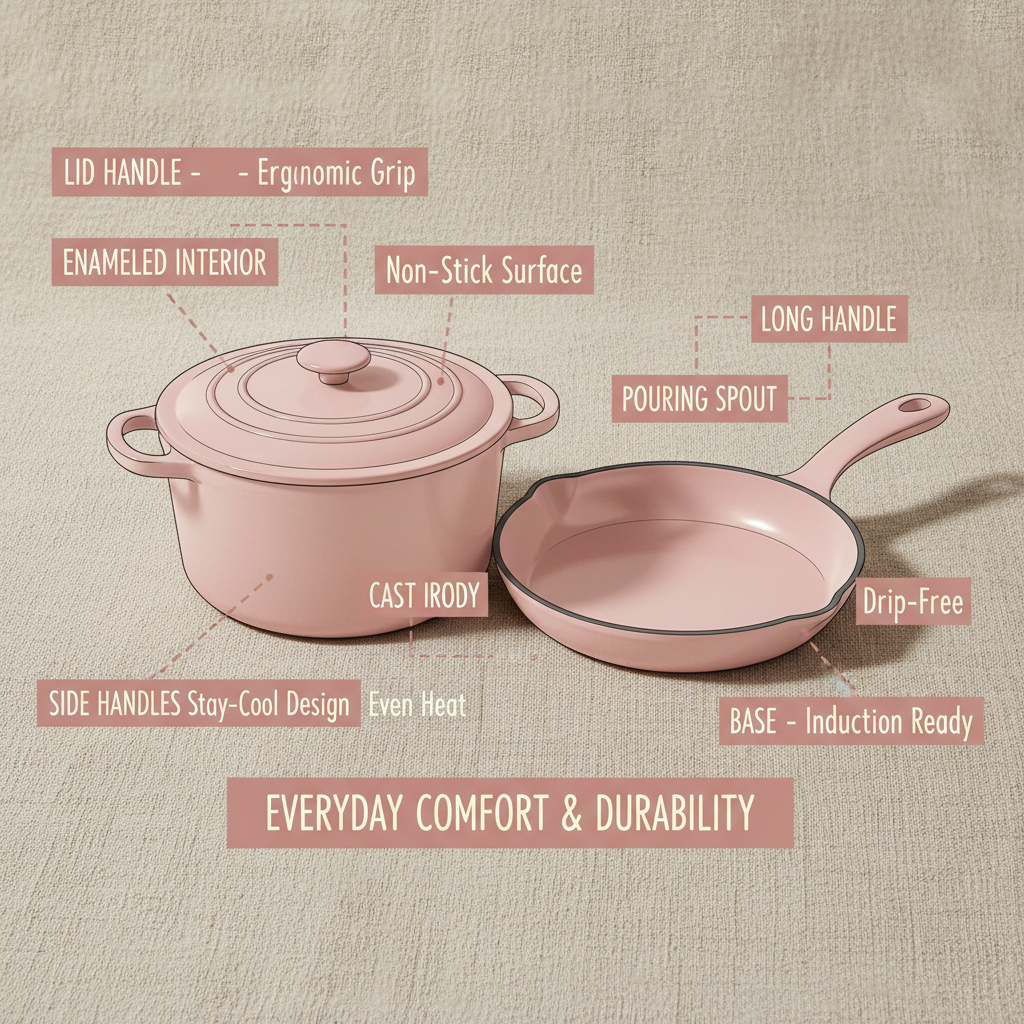
The Global Appeal and Market Context of Pink Cast Iron Cookware
The global demand for specialty kitchenware has seen a significant uptick, with a growing segment of consumers seeking products that align with "Dopamine Decor"—the practice of using bright, cheerful colors to improve mood. pink cast iron cookware has emerged as a cornerstone of this movement. Market data suggests that the shift toward "Instagrammable" kitchens has pushed manufacturers to move beyond standard black and red, integrating sophisticated palettes that appeal to a younger, design-conscious demographic without compromising on the industrial standards of the ISO quality frameworks.
However, this trend addresses a deeper challenge: the perceived "intimidation factor" of traditional cast iron. Many novice cooks avoid raw cast iron due to the fear of rust and the complexity of seasoning. By presenting the same heavy-duty performance in an inviting pink enamel finish, the industry has lowered the barrier to entry, making professional-grade heat distribution accessible to a wider audience who value both the psychology of color and the physics of metallurgy.
Defining the Technical Essence of Pink Cast Iron Cookware
In technical terms, pink cast iron cookware is a composite product consisting of a high-carbon iron core fused with a vitreous enamel coating. The "pink" aspect is achieved through the addition of specific metallic oxides to the glass frit before it is fired in a kiln at temperatures exceeding 1,500 degrees Fahrenheit. This process creates a covalent bond between the enamel and the iron, resulting in a surface that is non-porous, hypoallergenic, and incredibly resistant to chemical reactions with acidic foods.
From an industry perspective, this cookware represents a bridge between traditional foundry work and modern chemical engineering. The iron core provides the necessary thermal mass to prevent temperature fluctuations during searing or braising, while the pink enamel exterior serves as a protective barrier against oxidation. This dual-layer construction solves the primary humanitarian need for sustainable, long-lasting tools that do not leach harmful chemicals into food, unlike some low-quality non-stick alternatives.
Essentially, when we speak of pink cast iron, we are discussing a high-performance culinary tool designed for longevity. It is not merely a cosmetic change; the enamel coating allows the pan to be used with a broader range of ingredients—such as tomato sauces or wine-based reductions—without the risk of stripping a seasoned layer or altering the flavor profile of the dish, which is a common struggle with traditional black cast iron.
Core Components and Performance Factors
The primary performance factor of pink cast iron cookware is its superior thermal conductivity and retention. Because the iron core is dense, it absorbs heat evenly, eliminating the "hot spots" often found in thinner aluminum or stainless steel pans. This ensures that whether you are baking a loaf of sourdough in a pink bread pan or searing a steak, the heat is distributed consistently across the entire surface.
Another critical component is the durability of the vitreous enamel. High-quality pink cast iron cookware uses a multi-coat process to ensure the pink pigment remains vibrant even after years of exposure to high heat. This scalability in production allows for various product categories, from Dutch ovens to Takoyaki pans, all maintaining the same rigorous standards of scratch resistance and heat stability.
Finally, the ergonomics of the design—such as the integrated handles and tight-fitting lids—play a vital role in its efficiency. The heavy lids on pink Dutch ovens create a pressurized environment that locks in moisture, accelerating the cooking process for tough cuts of meat while maintaining the aesthetic integrity of the cookware. This blend of form and function is what defines the modern standard for premium enameled cast iron.
Practical Applications in Modern Culinary Settings
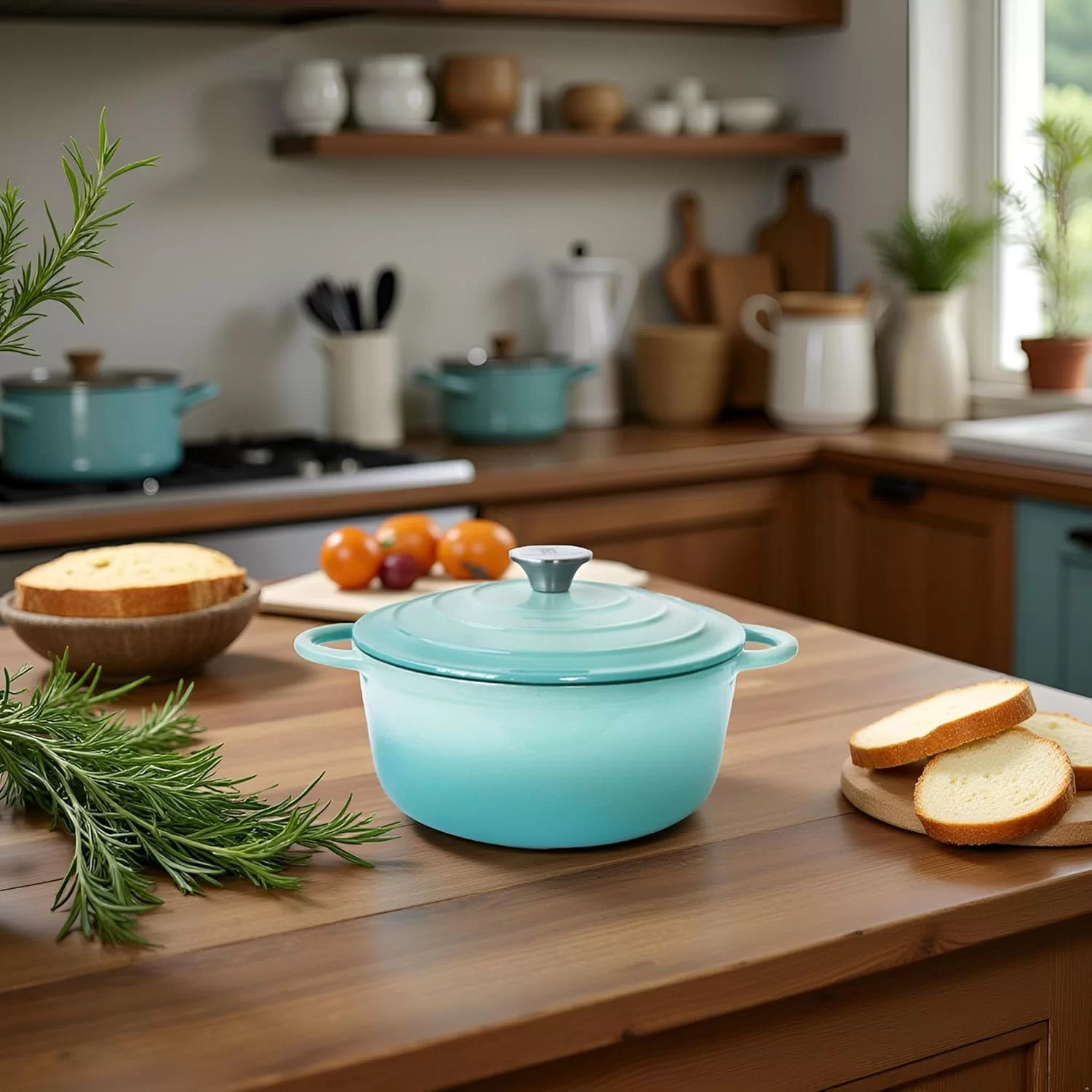
The versatility of pink cast iron cookware allows it to transition seamlessly from the stovetop to the oven and finally to the dining table. In professional culinary workshops and high-end home kitchens, the "oven-to-table" capability is highly valued. A pink enamel casserole, for instance, maintains heat long after it has been removed from the oven, ensuring that guests are served warm meals while adding a sophisticated pop of color to the table setting.
Beyond standard home use, these pieces are increasingly found in boutique catering and food photography. The visually striking nature of the pink hue makes it a favorite for content creators and chefs who want their presentations to stand out on social media. Moreover, in regions where slow-cooking is a cultural staple, the efficiency of the cast iron core helps reduce energy consumption by requiring lower heat settings to maintain a steady simmer over long periods.
Performance Comparison of Pink Cast Iron Cookware Variants
Tangible Advantages and Long-Term Value
Investing in pink cast iron cookware offers a unique blend of emotional satisfaction and logical value. From a sustainability standpoint, these pieces are designed to last for generations. Unlike Teflon-coated pans that degrade and need replacement every few years, a well-maintained enamel cast iron pot can be passed down as a family heirloom. This longevity significantly reduces the environmental footprint associated with the constant production and disposal of cheap cookware.
Furthermore, the reliability of the material ensures a level of food safety and consistency that is hard to match. The non-reactive nature of the pink enamel means that there is no risk of metallic tastes leaching into the food, providing a "pure" flavor profile. For the user, this translates to a sense of trust and dignity in the kitchen, knowing that their tools are not only beautiful but are engineered to provide the safest and most efficient cooking experience possible.
Future Innovations in Enameled Cast Iron Technology
The future of pink cast iron cookware is trending toward "green" metallurgy and smart coatings. Manufacturers are exploring the use of recycled scrap iron to reduce the carbon footprint of the smelting process, while still maintaining the structural integrity required for high-end cookware. We are also seeing a shift toward more eco-friendly, lead-free, and cadmium-free glazes that ensure the pink pigments are derived from sustainable mineral sources.
Digital transformation is also playing a role in the production phase. Precision casting and automated enamel spraying are reducing material waste and ensuring a more uniform thickness of the coating. This means that future pink cast iron pieces will be lighter without losing their heat-retention properties, solving one of the primary complaints regarding the weight of traditional iron cookware.
Moreover, the integration of induction-ready bases is becoming the standard. As more households transition to induction cooktops for energy efficiency, the adaptation of pink cast iron cookware to be perfectly flat and magnetically receptive ensures that this traditional material remains relevant in the age of smart kitchens and green energy.
Addressing Challenges in Pink Cast Iron Maintenance
Despite its advantages, pink cast iron cookware is not without its challenges. The most common issue is the potential for "thermal shock," where sudden temperature changes (such as placing a hot pan in cold water) can cause the enamel to crack or chip. To overcome this, experts recommend a gradual cooling process, allowing the pan to reach room temperature before washing.
Another challenge is the maintenance of the pink exterior's luster. Over time, burnt-on oils can stain the surface. However, the solution lies in using a mixture of baking soda and warm water, which gently lifts stains without scratching the vitreous glaze. Avoiding abrasive steel wool is paramount to preserving the smooth finish and ensuring the cookware remains as visually stunning as the day it was purchased.
Ultimately, the perceived difficulty of cleaning enameled iron is far outweighed by its benefits. By shifting the user's mindset from "disposable" to "curated," the industry is teaching a new generation how to care for their tools. The transition from raw iron to enameled pink iron is a step toward a more convenient, yet still professional, culinary experience.
Comparison of Maintenance and Performance for Pink Cast Iron Cookware
|
Cookware Type
|
Heat Retention Score
|
Maintenance Level
|
Longevity Expectation
|
| Pink Dutch Oven |
10/10 |
Low |
Lifetime |
| Pink Grill Pan |
9/10 |
Medium |
20+ Years |
| Pink Round Skillet |
9/10 |
Low |
Lifetime |
| Pink Bread Loaf Pan |
8/10 |
Low |
Lifetime |
| Pink Wok & Pot |
8/10 |
Medium |
20+ Years |
| Pink Casserole |
10/10 |
Low |
Lifetime |
FAQS
Yes, high-quality pink cast iron is designed for versatility. It works exceptionally well on gas, electric, and ceramic stovetops. Most modern versions are also compatible with induction cooktops due to the magnetic properties of the iron core. However, we always recommend using a lower heat setting initially, as the superior heat retention of cast iron means you don't need "high" heat to achieve professional searing results.
No, one of the greatest advantages of pink cast iron cookware is that the enamel coating provides a smooth, non-reactive surface that eliminates the need for traditional seasoning. Unlike raw cast iron, you do not need to apply layers of oil and bake them in. Simply use a small amount of cooking oil or butter to prevent sticking during high-heat cooking.
To prevent chipping, avoid "thermal shock" by never placing a scorching hot pan directly into cold water; let it cool down naturally first. Additionally, use silicone or wooden utensils instead of metal ones to avoid scratching the surface. When storing your cookware, place a felt protector or a paper towel between stacked pans to prevent the bottom of one pan from scratching the interior of another.
While some manufacturers claim they are dishwasher safe, we strongly recommend hand-washing your pink cast iron cookware. Dishwasher detergents are often highly alkaline and abrasive, which can dull the vibrant pink finish over time. A gentle wash with warm soapy water and a soft sponge is the best way to ensure your cookware remains beautiful for decades.
If produced using professional-grade vitreous enamel, the pink color is fused into the glass layer and will not fade due to heat. However, it can become stained by burnt-on food residues if left too long. These stains are not a loss of color but rather a layer of carbonized oil. They can be easily removed with a baking soda paste and a non-abrasive sponge, restoring the original brilliance.
The weight is virtually the same as traditional cast iron, as the enamel coating is very thin. The "heaviness" is actually a benefit—it's what allows the cookware to distribute heat so evenly and keep food warm for longer. For those who find the weight challenging, we recommend using two hands or choosing smaller skillet sizes while still enjoying the performance of the cast iron core.
Conclusion
In summary, pink cast iron cookware represents a perfect marriage of industrial durability and modern design. By combining the timeless heat-management properties of cast iron with the convenience and aesthetic appeal of vitreous enamel, it provides a solution for the contemporary cook who refuses to choose between style and substance. From its ability to withstand high oven temperatures to its capacity to serve as a centerpiece on a dining table, this cookware offers long-term value, sustainability, and a joyful cooking experience.
As we look toward the future, the continued innovation in eco-friendly glazes and energy-efficient casting will only make these tools more essential in the sustainable kitchen. Whether you are a professional chef or a home enthusiast, incorporating these vibrant, high-performance pieces into your culinary arsenal is an investment in both your creativity and your kitchen's longevity. We invite you to explore the full range of possibilities and elevate your cooking game today. Visit our website: www.jsycastiron.com